Blog Post
Mar 1, 2026
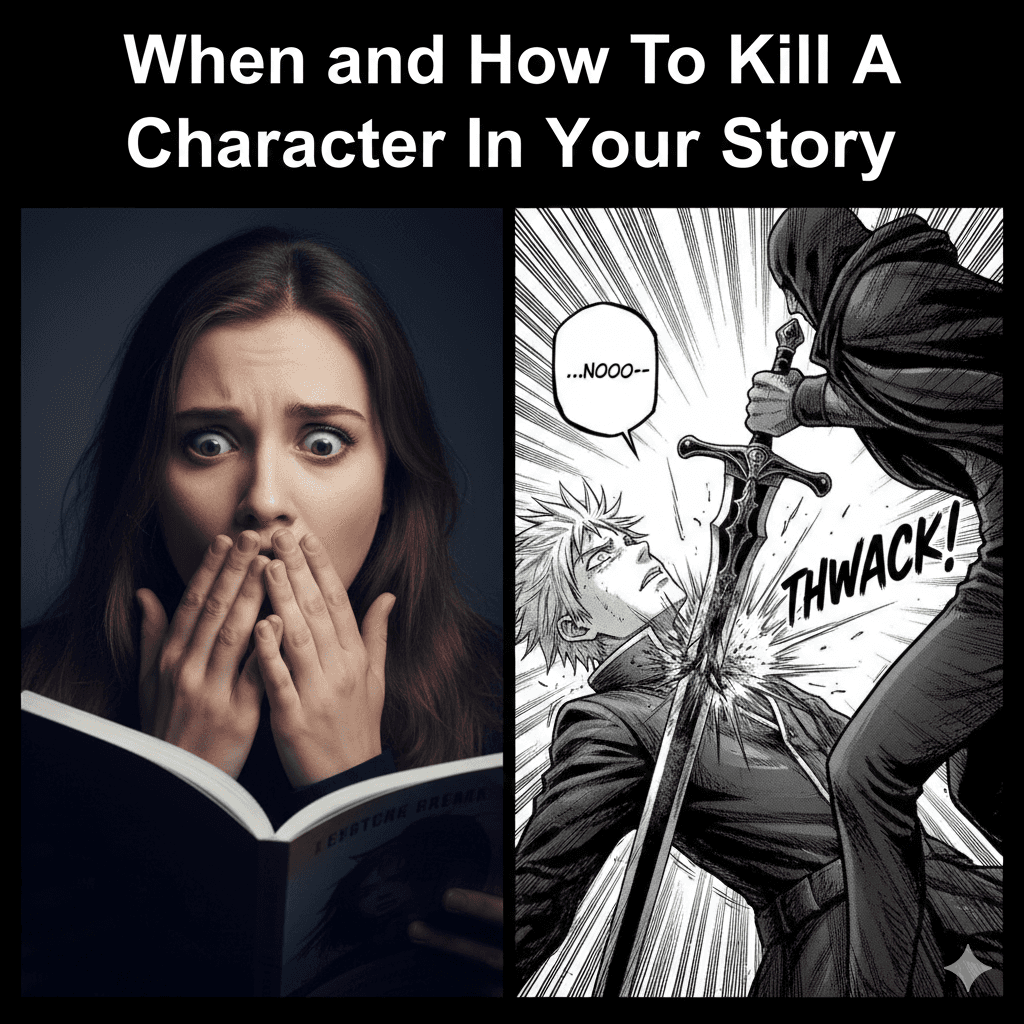
Death is one of the best ways to deepen a reader’s or viewer’s emotional connection to a story. Because the pain of grief can evoke a wide range of emotions.
But as the writer of the story, it can be tough to know when and how to kill a character, especially when you know it’s a necessary component to progress the narrative.
In your mind, you might be juggling questions of who to kill, how to validate their death, and when to kill them (we are still very much talking about fiction story writing here 😄).
I’m going to share with you two methods. My go-to ways for using death or bringing it into your novel, manga, or film.
METHOD 1 — Use it when you want to show how high the stakes are
So you’ve established a conflict or problem in your story, and you expect both readers and the characters within the story to take it seriously. But if no one’s life is at stake, then the problem isn’t that serious to begin with.
That is why when you have a story about an invasion, apocalypse, or some sort of violent takeover some of the general population in the story need to be unalived for the main characters to understand the gravity of the situation.
Now here is where you really put death to use. Unaliving some of the general population is great and all, but what it serves to do is to signal both your audience and the characters that okay, this is serious.
And it generally furthers any narrative going forward. But the real use of death to deepen your audience’s connection to your story and show how high the stakes are, is when it happens with a supposedly important character.
I’ll give you some examples of this in play.

In the movie, The Wheel of Time when Siuan Sanche was not only suddenly and shockingly stripped of the Amyrlin Seat but also killed. I remembered watching that scene and an alarm bell went off in my brain, like 🤯.
It immediately lets your audience know just how highhhh the stakes are, and that also brings about this huge feeling of concern that anyone could be unalived at this point.
And that deepens the connection to your story. (Proof that this technique was employed, the director himself said it in an interview that Siuan’s death goes to show you how high the stakes are.)
Another example is in the novel Children of Blood and Bone, when Zu, a child leader who has done nothing wrong, is murdered by King Saran’s guards.

METHOD 2 — Use it to trigger another character’s growth
Growth here doesn’t always mean the improvement of a character to become stronger or wiser.
Growth of that character could also mean a sort of evolution, a reason for a downward spiral, or an unexpected change.
This method implies using death as a way to further the narrative of your story in terms of how it affects a particular character or characters.
In this way, you essentially use the death of another character as a catalyst or a trigger for the growth of another more important character to the narrative of your story.
For example, in the novel The Poppy War series, the death of Atlan who was seemingly an important character serves to evolve our main character Rin.
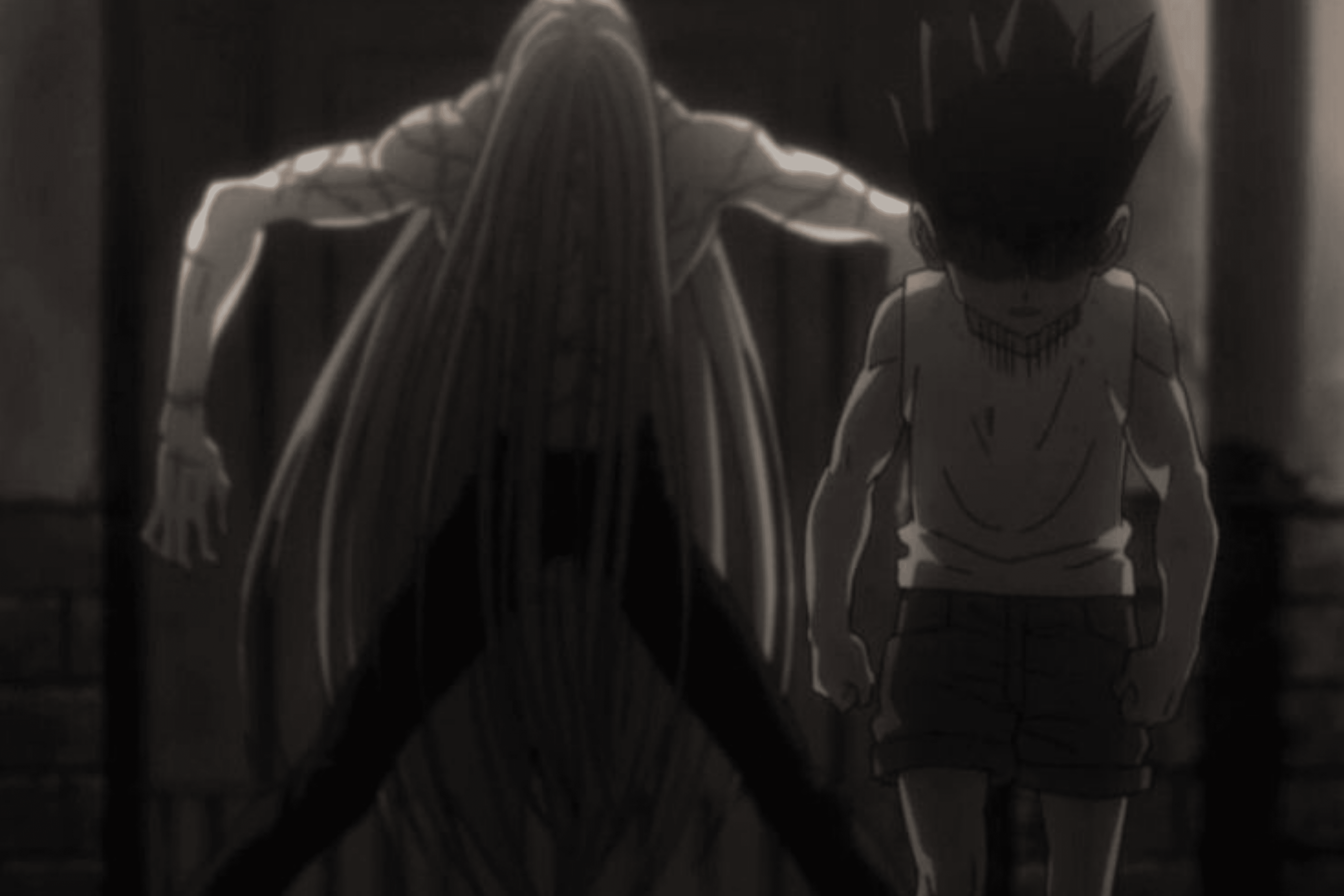
In Hunter x Hunter, what happened with Kite and how it affected Gon. In Black Panther, the oh so painful death of T’Challa, is used as the catalyst for Shuri’s evolution to a warrior queen.
Peter Parker’s future after Tony Stark died in Avengers. In Attack on Titan, the deaths of Sasha, Commander Erwin, and Hange evolves Eren, Armin, and many others. In Demon Slayer, Rengoku’s death builds up Tanjiro, and Jujutsu Kaisen’s death of Nanami.
Depending on your story, you can use it both of these ways as your plot progresses. A tip to remember is that you shouldn’t make it like a particular character exists just to die soon.
If your reader can predict it happening, it dampens the effect and reduces engagement rather than deepening the connection to your story.
Also important to note: the death must make sense within the context of the story and the development of that character.
What I mean is, when Siuan Sanche was killed in the coup, it made sense in the context of the story. The Wheel of Time had strong subplots of politics and power, especially within the White Tower. So it made sense a coup occurred in the story.
And when I say the development of that character, from what we knew about Siuan Sanche, if something were to kill her, a coup is consistent, because she would not expect that from her sisters. A death by a stronger channeler as well after an intense battle is also feasible.
If Siuan Sanche had died, say in a horse accident — that’s out of context and will make absolutely no sense to the strength of her character.
In Hunter X Hunter, it made sense that what got to Kite was a stronger being, and it happened mostly because his attention was divided to protect Gon and Killua.

I hope you enjoyed reading this and you found it insightful. Share your thoughts below!
Join the citizens of TOC
Subscribe to Trenches of Creation (TOC) newsletter
Lands in your inbox every Thursday with insights on worldbuilding, power systems, storytelling and more, to turn your ideas into legendary stories.
By subscribing you agree to our Privacy Policy
Comments
I want to hear from you