Blog Post
Feb 28, 2026
Writing comes easily to some of us. But for the rest of us, it may seem as complicated as coding.
It’s not that you don’t know how to write at least a respectable first draft, it’s that you might find yourself staring at a blank screen and oscillating between questions like…‘What should be the first words? What scene? What characters should I introduce first?’
I live for the joy my clients feel when I help them bring a story idea to life as an actual body of work.
But not everyone can afford to hire a talented writer or worldbuilder. And sometimes, you might really want to create this story yourself.
So if this describes you, the following steps are going to help you finally write your idea into a story. Even more, these steps can guide you to flesh your world, determine and build your fictional characters.
This works whether you're writing a comic book, novel, children’s story, or movie script.
STEP #1 - Answer the founding questions first (WWWH)
Identify the who, what, why, and how. Let's break it down:
Who — Who is this story about? Roughly list your characters and their roles. It’s okay if you can’t figure them all out at once. Oftentimes new characters are born as the writing progresses.
What — What is the story about? Expand your idea beyond the one-liner light bulb in your head. Stretch your imagination and build this idea into something tangible.
How — How do the things that happen in your story…happen? This is your world-building stage. If your story is set in a normal world such as ours, put that down too.
Why — The story's why + (Logically for your audience) Why do the things in the story happen? What brings about the what and how in your story?
Don’t worry, I love to guide with examples and there's a clear picture of each of these in action below.
Example:
I’m using the premise of a children’s story I wrote for a client a while ago. It's a simple example, so you can see how to answer the hard questions.
Title — Bobo and Momo and the Jungle of Golden Balls
The Who — our characters are Bobo and Momo (siblings), some imaginary monkeys, and Dad.
The What — the story is about two siblings who go on an imaginary adventure under the blanket in their room. In their adventure, they are on a mission to obtain some golden balls.
The How — the story is set in their room and the adventure takes place while they are both hidden under a blanket. In their adventure, the imaginary world is a magical jungle with fun monkeys and golden balls of treasure.
The Why — the story’s why is to show a strong bond between siblings through play — an older sibling and a much younger one. Logically, the kids are playing because they've just returned from school and there's nothing else to do.
STEP #2 - Do your outline
I know some people say they write without an outline, and to that I say…WHY? It's a lot of brain energy to you're expending to maintain the flow of a story in your head without actually putting it down.
There’s nothing like having it all in your head. You’re strangling the creative process by increasing your brain’s workload.
So start with an outline.
Your outline is simply a brief or elaborate description of how your story should flow.
It should answer the “what” — what will happen in this story? — and all the “how” — how will these things happen on a bullet point list.
The list should take you from the beginning to the middle and end of your story.
Let’s use the children’s story example again. Here’s an outline:
Bobo comes back from school
Bobo goes to play with his baby brother
They go on an adventure under the blanket
They are close to getting the golden balls
Dad comes in and calls them for dinner
Adventure is cut short, but Bobo tells Momo they’ll get the treasure next time.
You can literally see the story through the outline. A good outline cuts your work by 80%.
STEP #3 - Get the first words out and the rest will follow.
Your outline makes writing easier for you, but if you’re having a hard time even forming the first word, do this exercise.
Think of a scene in the outline that is most clear to you in your mind. That is a scene where you can imagine every part so clearly.
Hold that picture and start writing it…
Yes, in this moment you get to forget about the outline and just start from where you can.
Put down the words however you can. Don’t worry about grammar, spelling, and getting it right.
After you’ve gotten your writing spirit going with this exercise, you’ll find it easier to go back to the outline and start writing from the top.
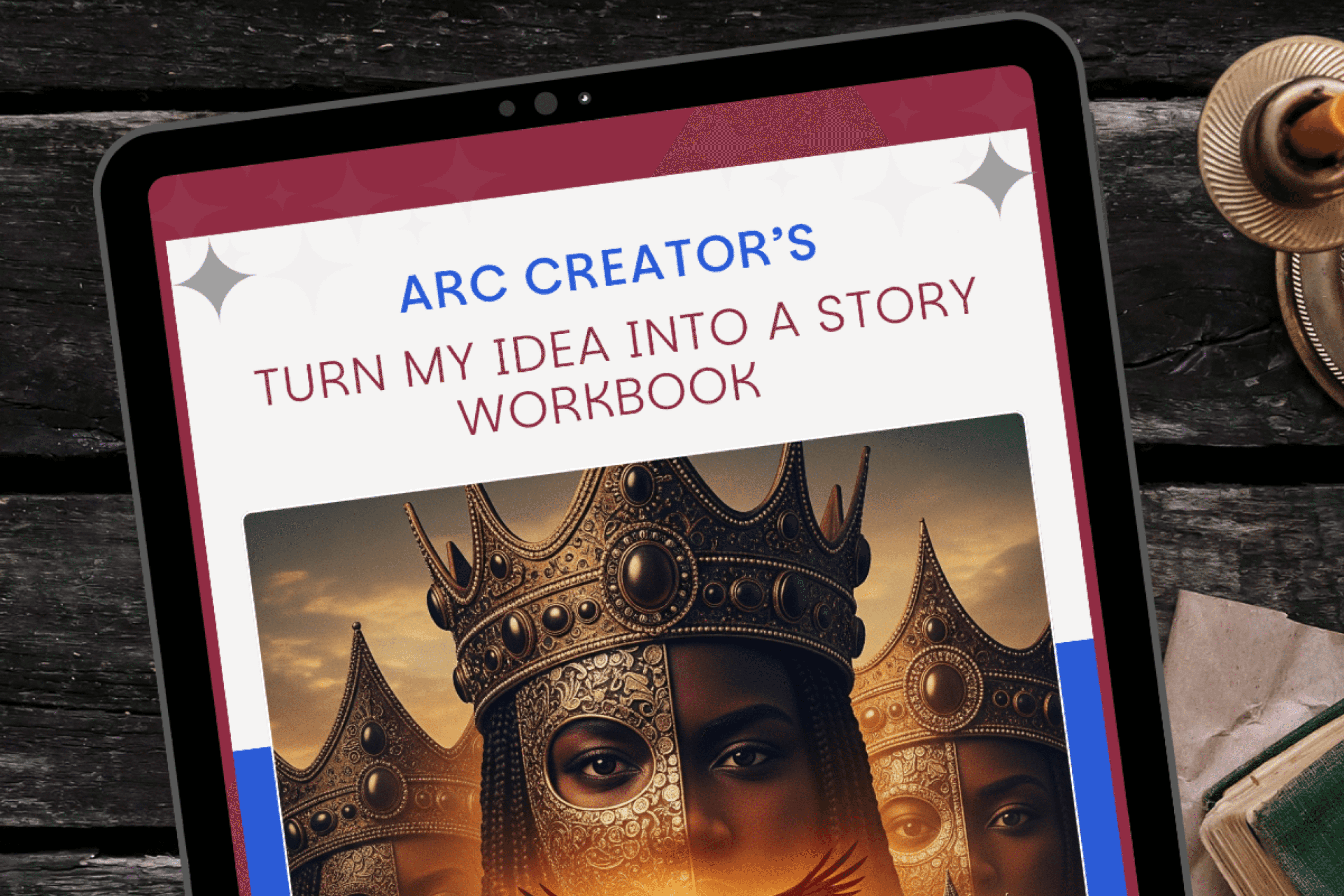
GET MY FREE GUIDE TO TURN YOUR IDEA INTO A STORY
With this guide and workbook you'll be able to better flesh your story's world, characters, and start writing a great story.
Did this blog post help you? I would like to hear your thoughts in the comments below.
Join the citizens of TOC
Subscribe to Trenches of Creation (TOC) newsletter
Lands in your inbox every Thursday with insights on worldbuilding, power systems, storytelling and more, to turn your ideas into legendary stories.
By subscribing you agree to our Privacy Policy
Comments
I want to hear from you